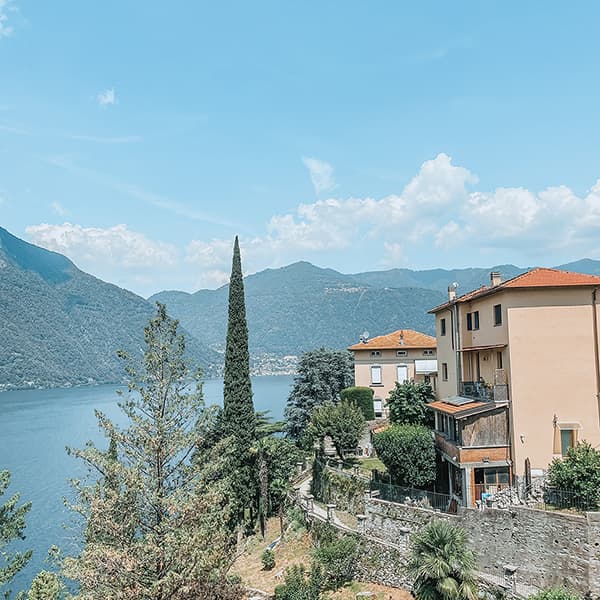

6 July 2025. Today I rode the entire right-hand side of Lake Como northwards toward Bormio. There’s not much to romanticise about the route: most of it went through tunnels, one after another. Honestly? Not the prettiest kilometres of the trip, but very efficient to reach the next beautiful destination.
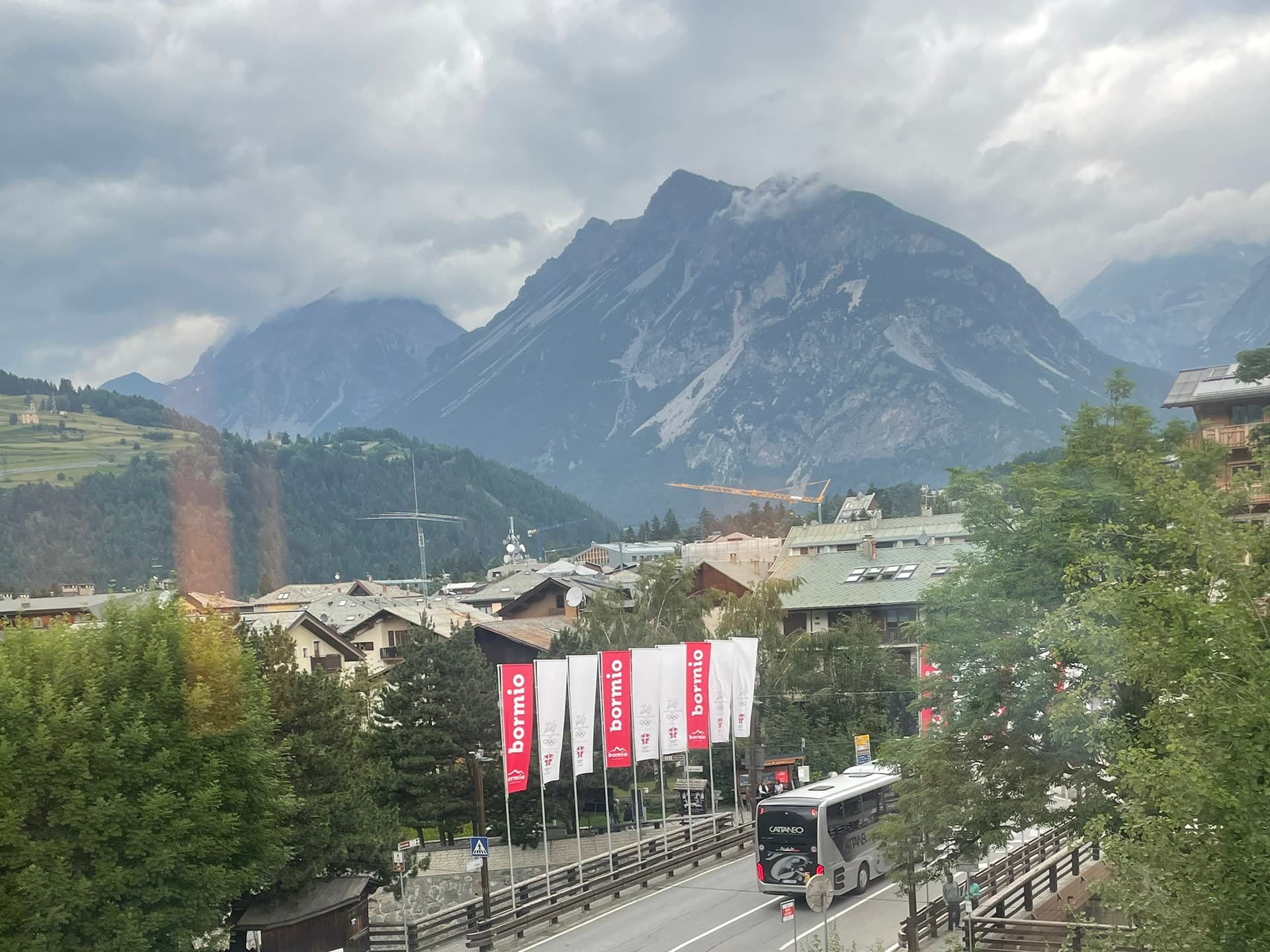
When I finally got out of the last tunnel, I saw the weather shifting quickly. Skies turning grey, mountains closing in… but I made it to Bormio just before the rain truly started. That was my only mission of the day. Everything else could wait.
First impressions of Bormio: wood, silence and mountains
My hotel turned out to be a gem: fully wooden interior, warm and cosy without feeling old-fashioned. A tiny terrace, a reading corner and (for a short moment) a view of the Stelvio. About fifteen minutes later, a thick grey cloud swallowed the entire mountain. As if it said ‘Hello’ and then disappeared again.
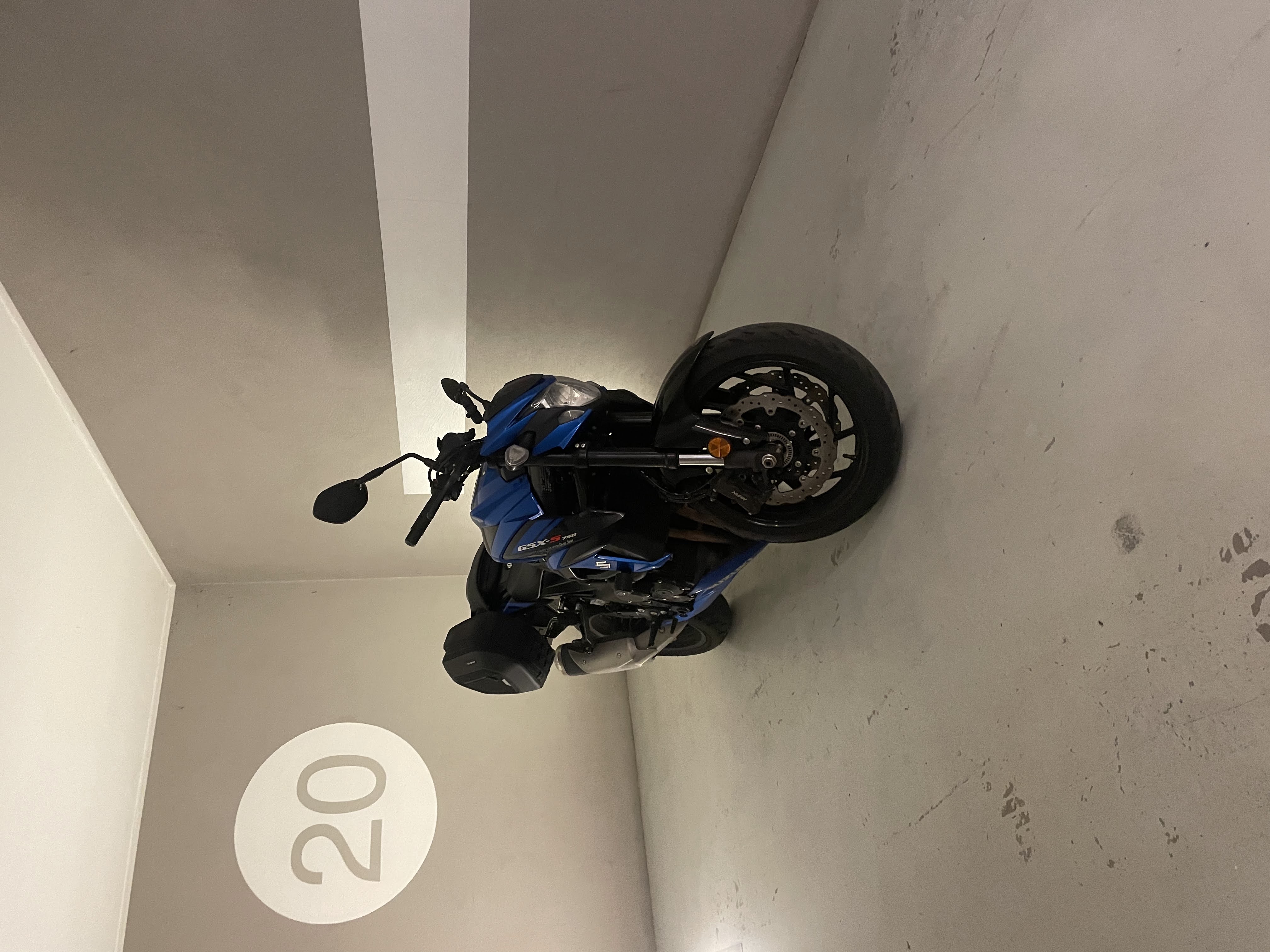
My own lit-up box
It’s often the small bits of luck that make a trip, as much as the big highlights. Keeping my bike locked up overnight matters a lot to me, ideally in a secured, hotel-only parking area. Here I got the luxury version: a full, hyper-modern box, I’d never seen anything like it, where my bike stood fully protected from the weather.
Why Bormio is the perfect base for mountain passes
It’s no accident that Bormio is a popular base for motorcyclists. From the town you ride almost straight into the mountains, with three spectacular passes within roughly 45 minutes.
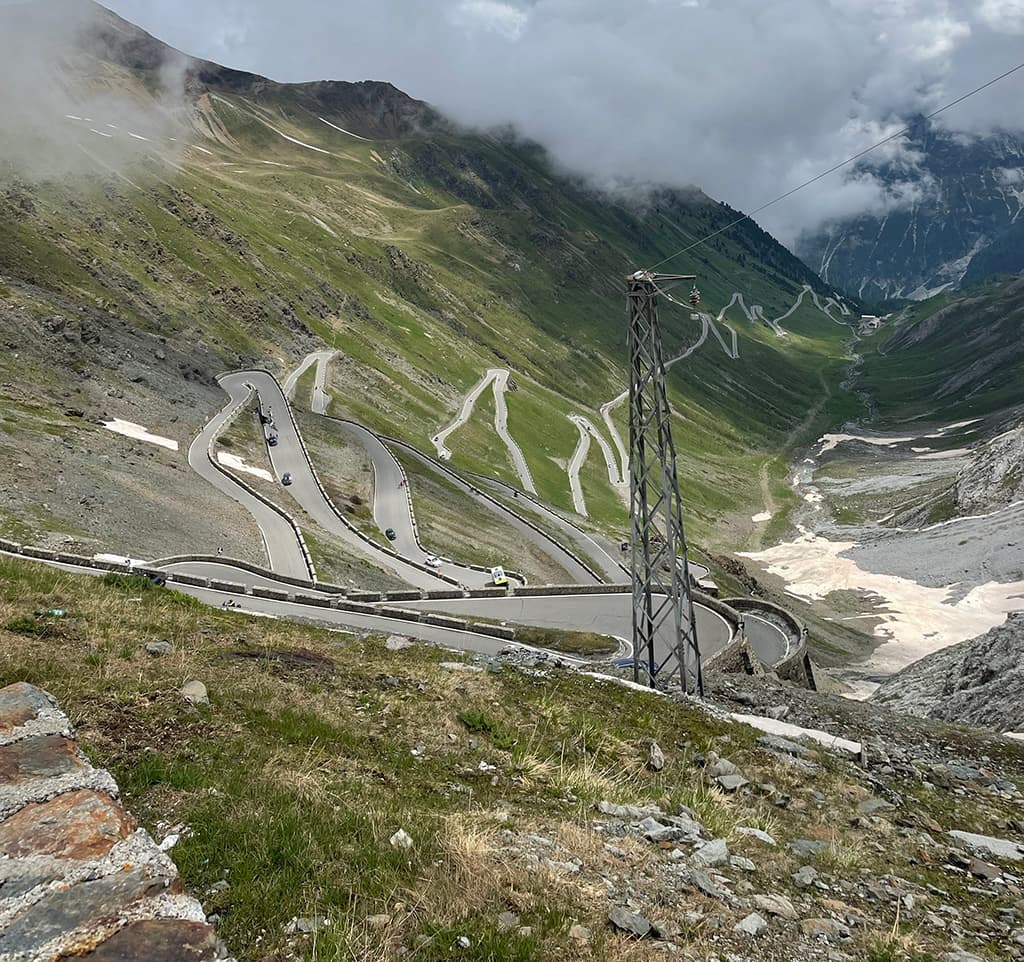
Iconic and technical. From Bormio you climb 21 kilometres through 40 numbered bends to the summit at 2,758 metres. On the other side wait the famous 48 hairpins down towards Prato. My hotel in Bormio sat almost at the foot of the Stelvio: not the side with the iconic photos, but the stretch I loved riding most.
Compared with tiny mountain villages higher up, Bormio also offers great restaurants, thermal baths, hotels with private parking, fuel stations and plenty of small shops for snacks, water or last-minute gear. If you want to ride the Stelvio without stress, Bormio is a calm, safe and smart choice.
When Bormio makes more sense than staying on the pass
Staying directly on a mountain pass might sound tempting, but for most riders it’s not the most practical choice. Weather can change quickly at altitude, temperatures drop fast in the evening, and services are limited.
Bormio, on the other hand, gives you flexibility. You can wake up, check the weather, and decide which pass makes the most sense that day. If the Stelvio is crowded or closed due to weather, you still have strong alternatives nearby.
- Consider staying 2 nights in Bormio to stay flexible in case of bad weather.
- Plan only one major pass per day as your main goal.
- Check pass status daily on alpen-paesse.ch.
- Always fill up your tank before entering the mountains: there’s nothing on the passes themselves.
An evening walk through the old town
Later that afternoon I wandered into the old centre. Bormio has that classic Alpine charm: wooden houses, stone alleyways and restaurants where the smell of melted cheese escapes into the streets. My first stop was a popular tavern, completely packed. People were waiting in the basement for a free table: cosy, but I didn’t feel like waiting today.
Gnocchi, local cheese & a glass of Braulio
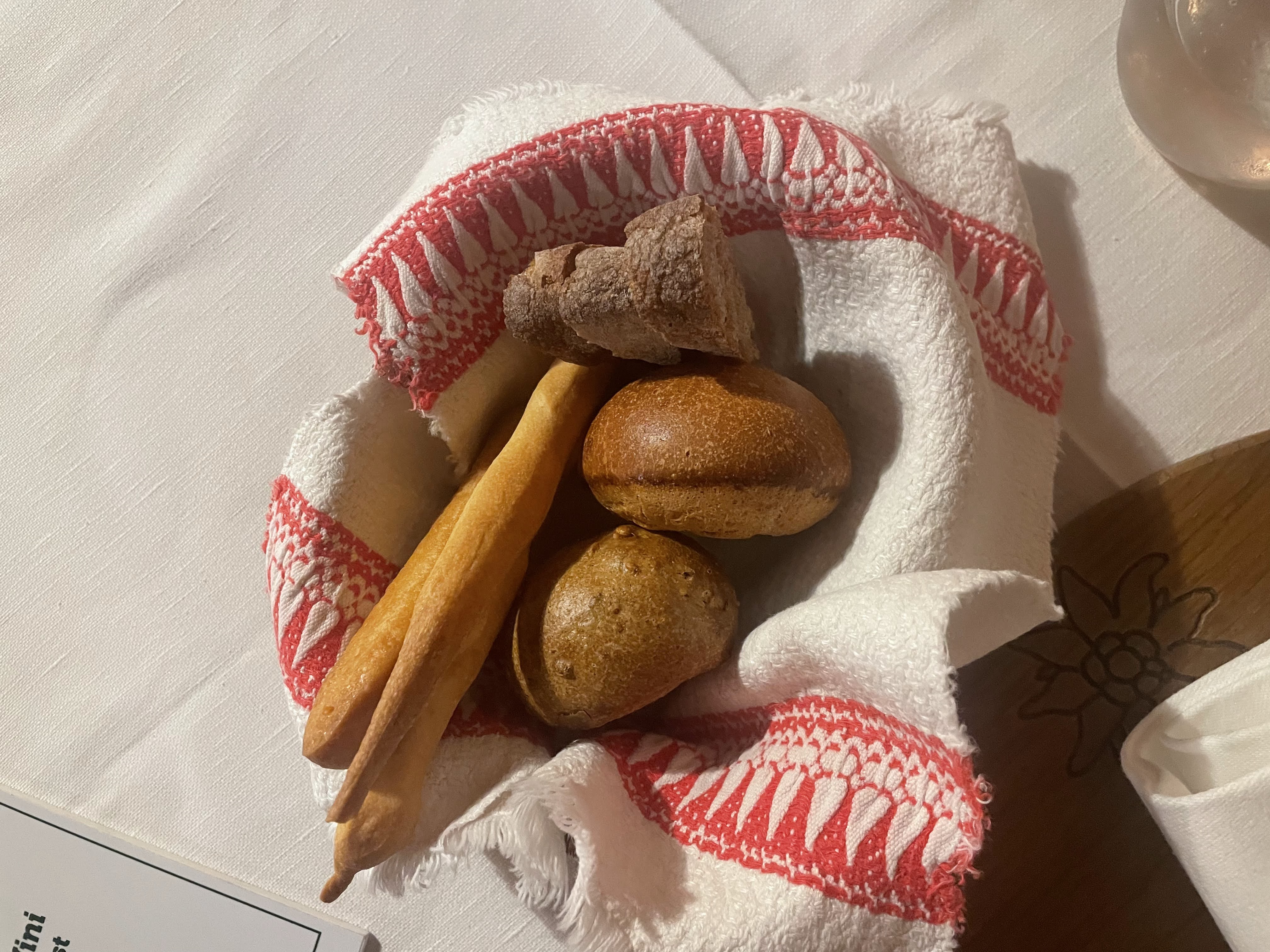
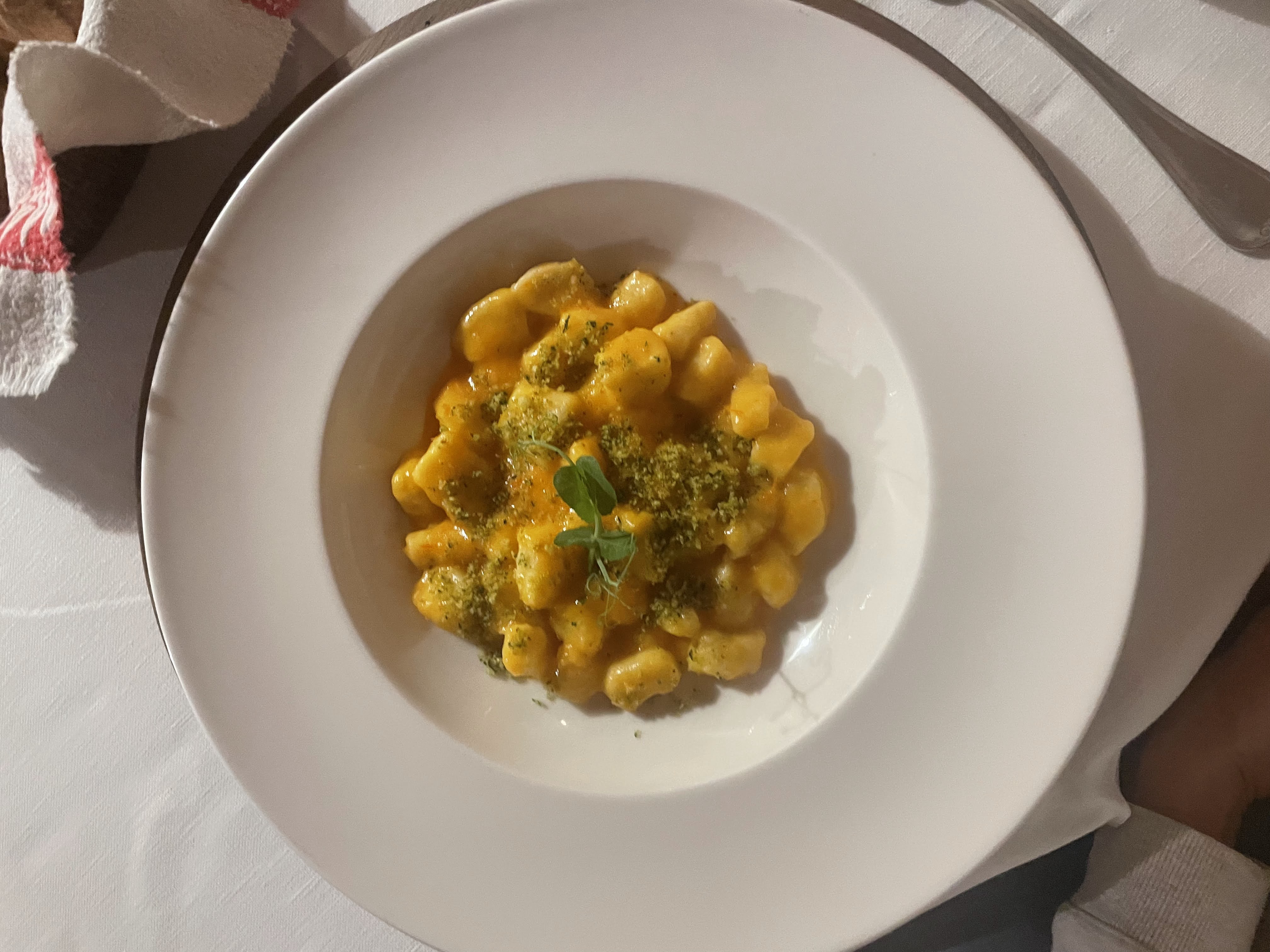
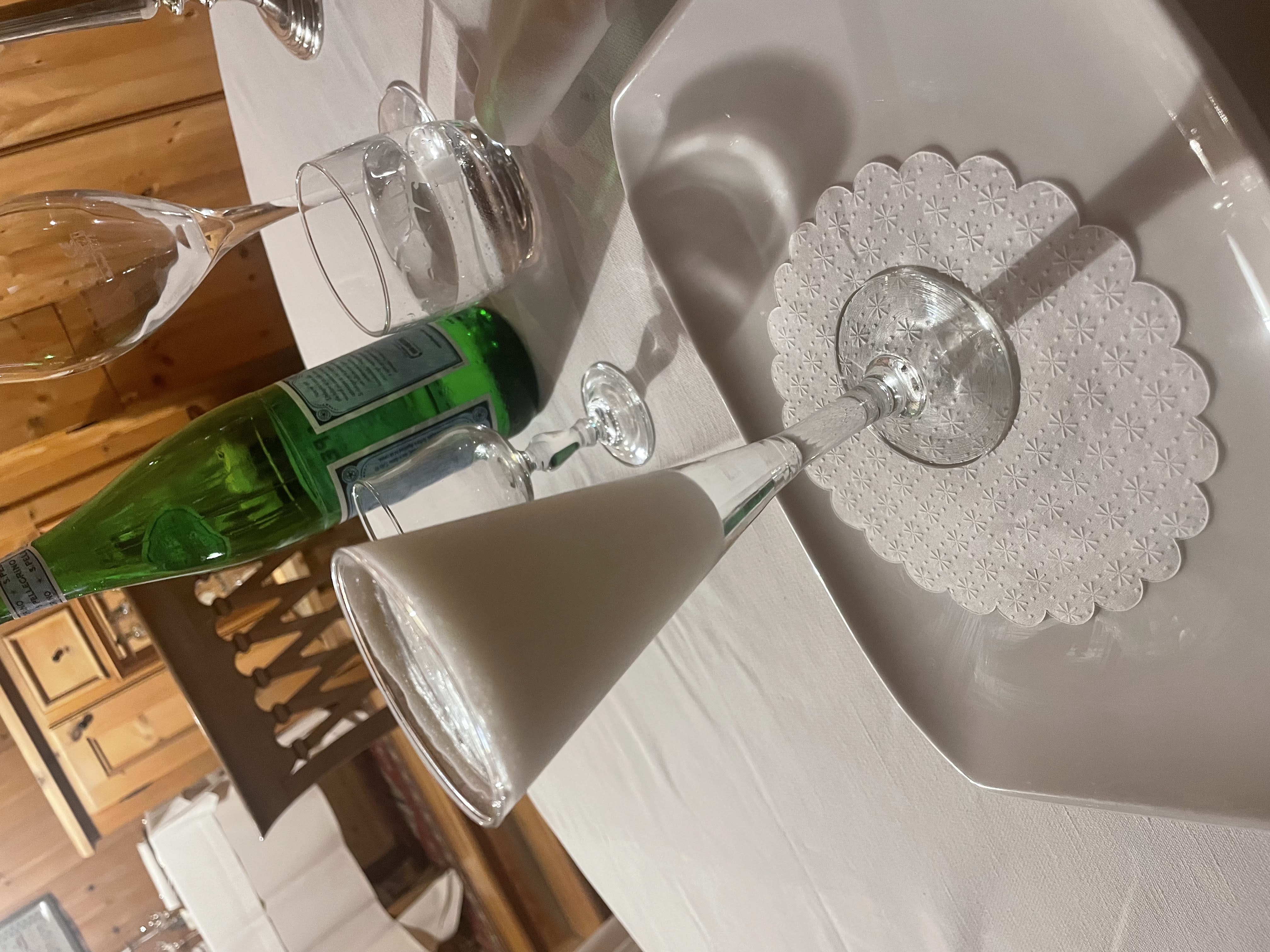
I eventually found a small hotel restaurant where I was treated wonderfully. A glass of Franciacorta, gnocchi (my absolute favourite), a local cheese plate and, to finish, Braulio: a bitter Alpine liqueur from Bormio itself. I tried it as a sorbet: definitely bitter, not quite my thing (I love sweet), but absolutely worth trying once.
Stelvio? Maybe tomorrow...
The plan was to ride the Stelvio early the next morning. But with the mountains completely covered in clouds, it didn’t feel right. So I decided: I’ll wait. I’ll shift my planning if I have to.
That’s one of the best things about travelling solo: you can adapt everything when you need to.
And Bormio is the kind of place where slowing down doesn’t feel like losing time at all: quiet, warm, surrounded by mountains that chose to stay invisible for a little longer.